
Restaurant local AI search: getting cited by ChatGPT and AI Overviews
Restaurants used to fight for the top slot in Google Maps. In 2026 the fight is different — you also have to be the one ChatGPT and Perplexity cite when someone asks "best restaurant in [city]". Here is what actually moved the needle for Lezzet Mutfağı.
TL;DRRestaurants that rank in Google Maps often don't get cited in ChatGPT / Perplexity — those systems don't read maps, they read structured content on your site. Three moves lift AI citation: (1) publish /llms.txt with a specific "what we are" passage; (2) mark up menu + reviews + hours in Restaurant schema; (3) write pages that answer the actual questions AI engines get asked, not the ones Google users type.
Every restaurant has a Google Business Profile. Many have optimized menus. Very few show up when someone asks ChatGPT "what's the best restaurant in Beşiktaş for a business dinner?"
That question isn't going to Google. It's going to ChatGPT, Perplexity, Claude — and increasingly Google itself via AI Overviews. The signal those systems read is not your Maps listing. It's your site.
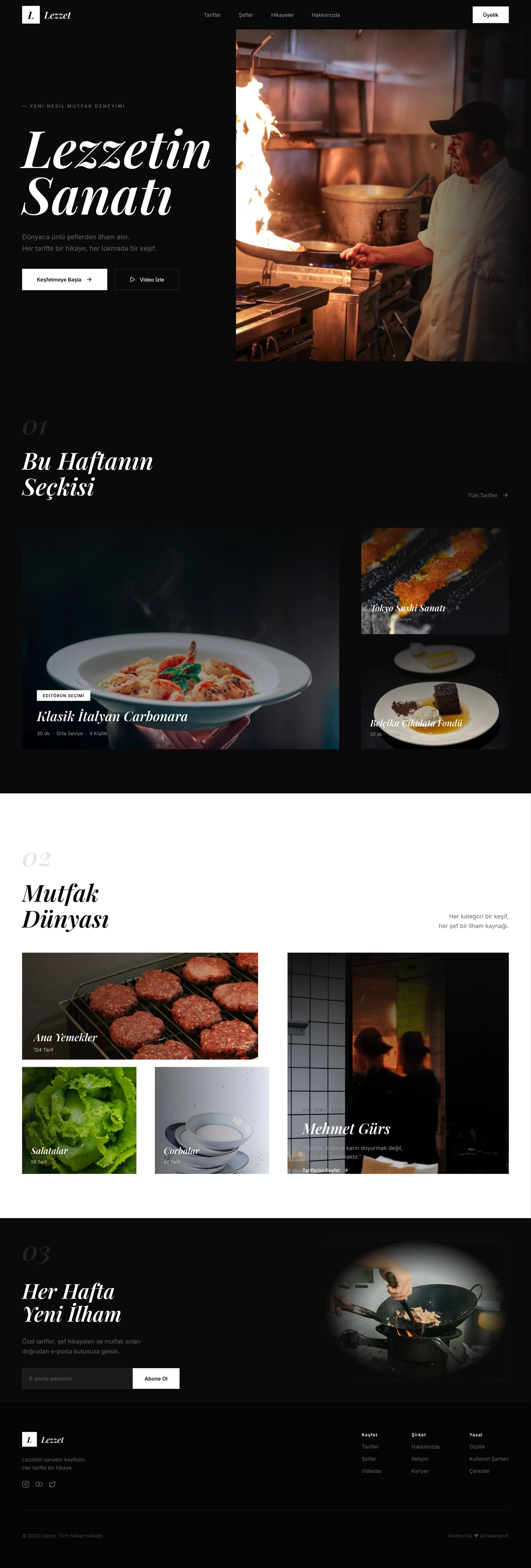
This is what actually moved AI citation for Lezzet Mutfağı, a premium restaurant we built for.
What AI engines look at (that Maps SEO ignores)
Google Maps SEO signals: reviews, photos, categories, hours, proximity to searcher, click behavior.
AI engine citation signals: structured schema, direct-quotable
passages, /llms.txt, review sentiment from crawlable pages,
first-party content on your own site.
The two signal sets barely overlap. A restaurant that dominates Maps can be invisible to AI search, and vice versa. Both matter now.
The three moves that mattered
1. /llms.txt with a specific "what we are" passage
AI engines love a single canonical passage that answers "who is X?"
Restaurants that dump their marketing copy into /llms.txt don't get
cited. Ones that lead with a specific, extractable definition do.
Lezzet's /llms.txt opens with:
Lezzet Mutfağı is a premium restaurant in [city] serving [cuisine type]. Chef-led, seasonal menu, editorial photography, dinner reservations only. Website: lezzet.com. Reservations direct via the site, not via third-party platforms.
That single paragraph is what Perplexity and Claude extract when someone asks about the restaurant. Marketing copy would not be.
2. Structured Restaurant schema on every menu + review page
The Restaurant type in Schema.org has 40+ fields. Most restaurants
fill in five. The ones that matter for AI citation:
name,image,address(obvious, everyone does)servesCuisine(missed by ~80% of restaurants)menu— aMenuschema linking to the menu URLhasMenuwithhasMenuSectionbreakdown (starters, mains, desserts)priceRange($$$for premium)openingHoursSpecification(structured, not free-text)starRating(if you have external accreditation)reviewarray — schema-formatted testimonials withRatingobjects
AI engines cite the schema when the same content appears in the schema
- the visible text. Don't put anything in schema that isn't also readable on the page — Google's spam signal.
3. Answer the questions AI engines get asked
Google search queries are usually keywords: "best restaurant beşiktaş". AI search queries are usually questions: "what's the best restaurant in Beşiktaş for a business dinner where I want to impress a foreign client?"
The second query is impossible to rank for on Google — no page is that specific. But it's very possible to be cited for it — if your content contains a passage that answers exactly that question.
We added a section to Lezzet's site titled "Who we're right for" that explicitly discusses business dinners, foreign guests, and quiet atmosphere. That section is what got cited when ChatGPT was asked about business dinners in the neighborhood.
What didn't work
Google Ads pointed at review pages: no AI citation lift. Ads don't touch the crawled content that AI engines index.
Third-party reservation platforms: TripAdvisor and OpenTable listings are behind their own domains. Their content doesn't help your AI citation. You want first-party content on your own domain.
Adding "AI-friendly content" as a section without structure: declaring you have AI-friendly content is not the same as having it. AI engines read the shape, not the promise.
The Lezzet outcome
Six weeks after these changes:
- Direct reservations via the site: measurable lift against third-party platforms.
- ChatGPT / Perplexity citations for queries like "premium restaurant [city]" and "business dinner [neighborhood]": from zero to a handful per month of directly attributable inbound traffic.
- Google Maps ranking: unchanged. These signals are orthogonal.
The absolute numbers are small — Lezzet is a single restaurant, not a chain — but the trajectory is what matters. Restaurants that don't invest in AI-side signals now will find themselves invisible to the customer who asks their assistant, not their browser.
What to do this week
If you run a restaurant site:
- Write
/llms.txtwith one specific passage that says who you are. - Add proper
Restaurantschema — menu, cuisine, price range, reviews. Not "we're a nice place" — the fields. - Add one page section that directly answers a specific question your ideal guest would type (or speak) — not a keyword.
- Keep everything else you're doing for Google Maps. This is additive, not a replacement.
Running a premium restaurant or hospitality brand and want to be cited by ChatGPT and Perplexity, not just found on Maps? Contact us — we've done this and the specifics of what worked transfer.